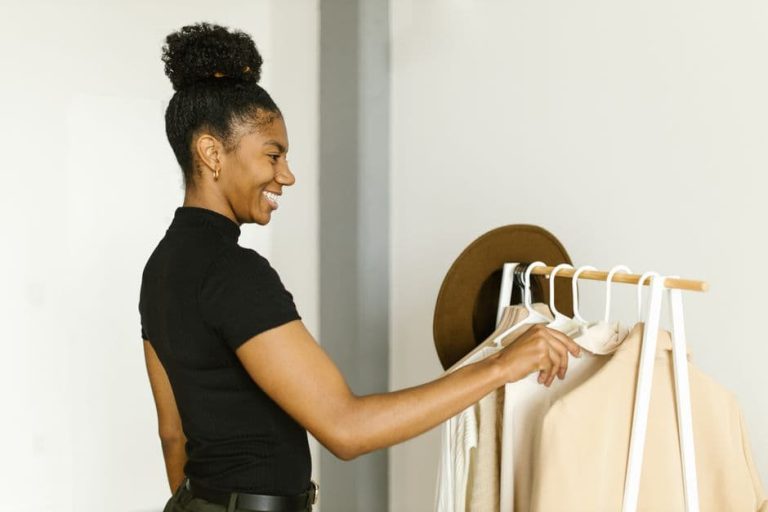
The essential basic clothing forms the foundation of a functional wardrobe. These pieces work well together, suit different occasions, and make daily choices easier.
In addition, versatile pieces help you shop better. Therefore, you can prioritize quality, comfort, and a good fit instead of following every trend.
Basic clothing to start a versatile wardrobe
Before buying, consider your routine. Work, studies, social commitments, and leisure activities require different combinations.
Therefore, start with colors that are easy to coordinate. White, black, navy blue, gray, beige, and denim create many possibilities.
However, there is no universal list. Your style, local climate, and budget should guide each choice. This way, you avoid pieces sitting unused in your closet.
Essential basic clothing for the upper body
Plain T-shirts are among the most useful pieces. Choose models made of cotton or comfortable fabrics, with suitable necklines and lengths.
In addition, a white or light-colored shirt expands your outfit options. It works with jeans, tailored trousers, skirts, and shorts.
It is also worth having a long-sleeved top. This piece creates layering options and offers protection on cool days.
- Plain T-shirts in neutral colors;
- A light-colored shirt with a good fit;
- A long-sleeved top;
- A lightweight third piece, such as a cardigan or jacket.
Basic clothes for creating different bottoms
A comfortable pair of jeans works for various situations. Prefer a wash that goes well with your shoes and tops.
On the other hand, neutral trousers create more polished looks. Straight-leg or wide-leg styles offer comfort and remain easy to match.
A shorter piece can also be useful in hot regions. In that case, choose the length according to your routine and comfort.
Therefore, consider actual use before buying. A versatile piece should go with at least three items you already own.
Basic clothes and the importance of the third piece
Jackets, blazers, cardigans, and overshirts transform simple outfits. In addition, these pieces help adapt your look to different temperatures.
A denim jacket creates a casual look. A neutral blazer, on the other hand, conveys a more structured appearance, even with a T-shirt and sneakers.
However, choose only styles that suit your personal style. The best third piece is the one you can actually wear during the week.
To choose well, check three points:
- Does the fabric suit the climate of your city?
- Does the length allow you to move comfortably?
- Does the piece go with your basic clothes?
Basic clothes, footwear, and essential accessories
Footwear completes any wardrobe. A neutral sneaker works for casual commitments and everyday trips.
In addition, a more elegant option expands your possibilities. It could be a ballet flat, a loafer, a sandal, or a classic shoe.
As for accessories, prefer functional items. A neutral bag, a belt, and a few accessories can significantly change a look.
Consequently, you do not need many elements. Choose accessories that coordinate with your colors and appear frequently in your routine.
How to choose higher-quality basics
First, check the composition on the label. The fabric needs to offer comfort, durability, and ease of care for your reality.
Then, examine seams, finishing, and transparency. Try on the garment and move your arms, sit down, and walk around before deciding.
Also consider maintenance. A garment that requires care incompatible with your routine can quickly lose its usefulness.
Finally, compare the cost per wear. A slightly more durable garment may make sense when you intend to wear it many times.
You can consult care guidelines on the official Inmetro website. In addition, learn more here about wardrobe organization.
How to organize basic clothes without going overboard
Separate the pieces by category and frequency of use. This way, you can quickly identify what suits your daily life.
Next, remove uncomfortable or unused items. However, consider simple repairs before discarding a piece.
Plan combinations in advance. Photographing a few outfits can reduce decision-making time during busier mornings.
In addition, review your wardrobe at different times of the year. This way, you notice real gaps instead of buying impulsively.
Frequently asked questions
How many basic clothes should I have?
There is no fixed amount. Start with enough pieces for your weekly routine, taking laundry, weather, and activities into account.
Which colors make combinations easier?
Neutral colors, such as white, black, gray, beige, navy blue, and jeans, usually make it easier to create combinations. Still, include colors that represent your style.
How can you avoid unnecessary purchases?
Before buying, check whether the item matches at least three pieces in your wardrobe. Also, consider frequency of use and necessary care.
Do basic clothes need to be boring?
No. You can add personality with cuts, textures, colors, subtle patterns, and accessories. The important thing is to maintain balance with versatile pieces.
Conclusion
The basic clothing help build a practical, comfortable, and cohesive wardrobe. Therefore, prioritize pieces that go well together and suit your routine.
Start gradually, assess what you really use, and choose quality within your budget. This way, your purchases become more conscious and functional.